Tiger beetles and people have much to worry about with this American Administration. Tiger beetles because of the total disregard of life and people - especially in the US - the disrespect of human rights and the Great American Experiment. I did this image at this moment of great sorrow.
I wonder, when I vier towards the political, whether I should or not... It is my blog. In one of the striking comments in John Barry's Book, the Great Influenza, he talks about how people took such great loss for granted- accepted it or ignored it... and rarely wrote about their personal experiences. So, I feel that just for the few, I should reveal the depth of our loss as I see it.
At this time, many people are discussing their feelings and thoughts and political ideas on this great conveyance, the Internet. I hope that what is happening will not be relegated to plots and numbers and headlines. I hope that the voices of the world will he available to read and study. I can't imagine people being much different then we are at this moment in time... so, I suspect that the same ills will rise up to hurt and disfigure. But maybe, somewhere there will be minds willing to do better...
Thursday, September 21, 2006


Thursday, August 31, 2006
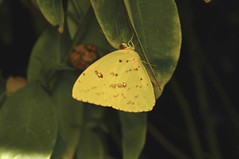
Cloudless-sulphur (Phoebis sennae)
Wonderful news! This Cloudless sulphur dropped in this evening at early dark, to sleep the night in my Night-blooming Jasmine
(Cestrum nocturnum).
These animals migrate from Mexico north up to Palos Verdes Peninsula. I have found them as far north as in Mugu Marsh in Ventura. Cloudless Sulphurs are desert butterflies and their larvae eat Cassia alata... They used to be more plentiful in Southern California perhaps, when people planted Crotalaria agatiflora in their back yards. . Certainly people have planted the good the bad and the ugly with their particular needs for ornamentals for their houses (that become invasive species) , or if they or they plant monocultures, or people just accidently walk them in
This shot was taken with a leaf filtering the bright flash from my camera....
(Cestrum nocturnum).
These animals migrate from Mexico north up to Palos Verdes Peninsula. I have found them as far north as in Mugu Marsh in Ventura. Cloudless Sulphurs are desert butterflies and their larvae eat Cassia alata... They used to be more plentiful in Southern California perhaps, when people planted Crotalaria agatiflora in their back yards. . Certainly people have planted the good the bad and the ugly with their particular needs for ornamentals for their houses (that become invasive species) , or if they or they plant monocultures, or people just accidently walk them in
This shot was taken with a leaf filtering the bright flash from my camera....
Monday, August 21, 2006
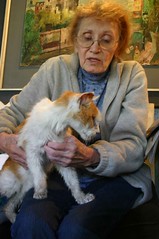
holding-Torchy
How much do we value life?
Our lives? the lives of our children? the lives of our parents? the lives of our spouses? the lives of our friends? our neighbors? our countrymen? other life?
How do we rate life?
Which lives are more important? Which are less? Why do we think humans are more important then other animals and plants? Do we value those animals with fur over those with six legs? How do those with scales rate to those with feathers? Why do we have such a system of worth?
What would life really be like without other life forms?
Other life is important to me. I would never want to be in a position to choose which lives and which dies especially if it came to deciding whether my child or parent or friend .... or even a stranger.... were more important....
But somehow, we do. We do it everyday. Knowingly and unknowingly. We use chemicals to have large strawberries and kill birds and insects and reptiles and mammals and increase our own body burden of toxins...... And just for some big strawberries.... and maybe not even very delicious ones at that!
We do when we go to war. We decide which people have more worth then others. It's not magic. It's not some edict from heaven. It is one then another then another person declaring that 'those people over there must die.' And it is as simple as that.
It is hard to live with differences. People that think differently, People that look different. People that do things and eat things and say things that are different. It is hard to reconcile that we have the same body and behavioral plan yet we have these small differences that irk us.
How do we live with animals that don't have the same body plan? that cannot speak as we do? that cannot understand our shape and smell and movements and our life styles? But what makes us love and love other animals? and care for each other when not caring is so easy? not loving is so easy?
I felt somewhat silly when the Cicindela that I studied for ten months died, I cried. I cried over the death of an insect. But then, why not. Maybe it's just a simple decision to care.
My mother is loosing her cat. She found him 17 years ago wrapped in bamboo leaves with his sisters. My mother said his mother gave birth to her babies in the bamboo stand and left the kittens in the nest like a collection of easter eggs. The kittens were of various colors mixed with white. The mother was eaten by a coyote but my mother collected the kittens and she and her mother loved them.
Our lives? the lives of our children? the lives of our parents? the lives of our spouses? the lives of our friends? our neighbors? our countrymen? other life?
How do we rate life?
Which lives are more important? Which are less? Why do we think humans are more important then other animals and plants? Do we value those animals with fur over those with six legs? How do those with scales rate to those with feathers? Why do we have such a system of worth?
What would life really be like without other life forms?
Other life is important to me. I would never want to be in a position to choose which lives and which dies especially if it came to deciding whether my child or parent or friend .... or even a stranger.... were more important....
But somehow, we do. We do it everyday. Knowingly and unknowingly. We use chemicals to have large strawberries and kill birds and insects and reptiles and mammals and increase our own body burden of toxins...... And just for some big strawberries.... and maybe not even very delicious ones at that!
We do when we go to war. We decide which people have more worth then others. It's not magic. It's not some edict from heaven. It is one then another then another person declaring that 'those people over there must die.' And it is as simple as that.
It is hard to live with differences. People that think differently, People that look different. People that do things and eat things and say things that are different. It is hard to reconcile that we have the same body and behavioral plan yet we have these small differences that irk us.
How do we live with animals that don't have the same body plan? that cannot speak as we do? that cannot understand our shape and smell and movements and our life styles? But what makes us love and love other animals? and care for each other when not caring is so easy? not loving is so easy?
I felt somewhat silly when the Cicindela that I studied for ten months died, I cried. I cried over the death of an insect. But then, why not. Maybe it's just a simple decision to care.
My mother is loosing her cat. She found him 17 years ago wrapped in bamboo leaves with his sisters. My mother said his mother gave birth to her babies in the bamboo stand and left the kittens in the nest like a collection of easter eggs. The kittens were of various colors mixed with white. The mother was eaten by a coyote but my mother collected the kittens and she and her mother loved them.
Taking-Torchy-outside
Two of the calico sisters were eaten as young adults by other coyotes, one sister lived to 14, but the boy, Torchy is almost 18 years old. His life represents moments in time. My mother's mother and father were alive. My children were little. I lived in Ohio. I was married. But this cat's life is more then place holders for our lives, more then our memories. What is it? What is this life worth?
My mother strokes and pets and gives her cat his medicine for his diabetes. She takes him out into the garden, his little body of sticks with a fluffy tail. He tries to walk but is tired and upset with himself and so lies on his side and cries and huffs and then lays silent in the grass.
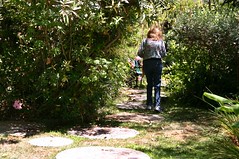
My mother strokes and pets and gives her cat his medicine for his diabetes. She takes him out into the garden, his little body of sticks with a fluffy tail. He tries to walk but is tired and upset with himself and so lies on his side and cries and huffs and then lays silent in the grass.
Sitting-with-Torchy
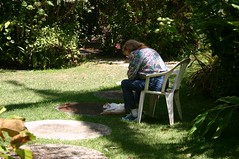
My mother loves this animal. She carries him and talks to him. She sits brushing the flies away.
When I was about five years old - ready to run up into the hills to hunt for lizards and bugs, I heard someone crying. I didn't recognize who it was so I followed the sound. I peeked around the corner and watch my grandfather carefully placing our cat, Shadow, into his grave. I had never heard him cry before.
When I was about five years old - ready to run up into the hills to hunt for lizards and bugs, I heard someone crying. I didn't recognize who it was so I followed the sound. I peeked around the corner and watch my grandfather carefully placing our cat, Shadow, into his grave. I had never heard him cry before.
Saturday, July 29, 2006
Asilidae
Asilidae are robber flies. Some species catch their prey in flight. Some catch prey on the ground. Just like spiders and some other arthropods, they use a neurotoxin, which they inject into the squirming catch to subdue it, and an enzyme to help digest the internal organs and some muscles (apparently, many muscles in the legs and other distant areas from the injection site are left behind).
This particular robber fly likes the top of a foldable cage that I have for my small tortoises. I have seen this one... or perhaps a few of its friends sitting one at a time in the same place (?), sitting waiting for something delicious to come by. The large red dragonflies (Anisoptera) that buzz the Gulf Fritillaries (Agraulis vanillae), have special tall reeds to alight on to either survey territory or to look out for food.
Here is another naturalist fro last year, with another robber of a different Genus.
http://nuthatch.typepad.com/ba/2005/07/the_hanging_thi.html
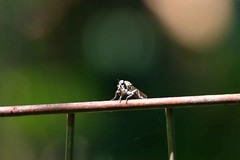
This particular robber fly likes the top of a foldable cage that I have for my small tortoises. I have seen this one... or perhaps a few of its friends sitting one at a time in the same place (?), sitting waiting for something delicious to come by. The large red dragonflies (Anisoptera) that buzz the Gulf Fritillaries (Agraulis vanillae), have special tall reeds to alight on to either survey territory or to look out for food.
Here is another naturalist fro last year, with another robber of a different Genus.
http://nuthatch.typepad.com/ba/2005/07/the_hanging_thi.html
Friday, July 07, 2006
Mocking-bird
I grew up listening to Mocking birds all night long in the summer.... sometimes winters, too. These birds are part of Southern California. When I lived in Ohio there weren't any. It was lonesome! There where Cardinals and Chickadees, and such, which I loved, but they didn't sing to me at night when I worked into the wee morning hours.
While working at Duke University, people said South Carolina had them. I hunted for them, but the one bird I did hear just did not have the same vocalizations as California birds.
Usually, in summer when it was hot, the crickets would whir in the evening and then slow to a chirp in the cooler morning hours. That was when the lonely male Mocking birds would call for a mate.
When I was a child I used to listen to them to fall asleep. I use to try to listen for the different birds they would imitate. Some Mocking birds would take their time going through their repertoire. Others would speed from one song to the next. I hear them now, mimicking pet parakeets and once .... I heard one calling like the Rails I hear in the summer mornings in the Salicornia of Mugu Lagoon.
When I was young and the world was about to blow up from this bad country or that bad leader, I used to think that if things DID go wrong and bombs blew much of our world away the Mocking bird would have fewer birds from which to learn songs. Maybe, the Mocking birds would have to try to remember songs from each other - I thought that they would very quickly forget and their songs would deteriorate into squeaks and bangs and whirrs that came from people.... or maybe they would just go silent.
Silent Spring had been printed and was quite famous when I thought of these things. I was too young to have read the book - well, reading wasn't on my plate until after HIgh School - but, the fear of loosing of birds and bugs and furry animals and plants were. Actually, after working with thousands of children, I find that that is something that little kids DO worry about besides the loss of their parents. WHo wants to grow up in a barren world of nothing but people.... UGH!
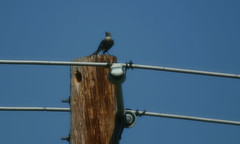
While working at Duke University, people said South Carolina had them. I hunted for them, but the one bird I did hear just did not have the same vocalizations as California birds.
Usually, in summer when it was hot, the crickets would whir in the evening and then slow to a chirp in the cooler morning hours. That was when the lonely male Mocking birds would call for a mate.
When I was a child I used to listen to them to fall asleep. I use to try to listen for the different birds they would imitate. Some Mocking birds would take their time going through their repertoire. Others would speed from one song to the next. I hear them now, mimicking pet parakeets and once .... I heard one calling like the Rails I hear in the summer mornings in the Salicornia of Mugu Lagoon.
When I was young and the world was about to blow up from this bad country or that bad leader, I used to think that if things DID go wrong and bombs blew much of our world away the Mocking bird would have fewer birds from which to learn songs. Maybe, the Mocking birds would have to try to remember songs from each other - I thought that they would very quickly forget and their songs would deteriorate into squeaks and bangs and whirrs that came from people.... or maybe they would just go silent.
Silent Spring had been printed and was quite famous when I thought of these things. I was too young to have read the book - well, reading wasn't on my plate until after HIgh School - but, the fear of loosing of birds and bugs and furry animals and plants were. Actually, after working with thousands of children, I find that that is something that little kids DO worry about besides the loss of their parents. WHo wants to grow up in a barren world of nothing but people.... UGH!
Monday, July 03, 2006
Fred-at-window
Grief! It has been too long! I have focused my energy to helping a friend get her work done for her thesis. It is now time for my stuff. I have a paper to finish, but it is getting there...
Fred, my old pal, loves to keep me company but I don't offer him any excitement up here in my small library nook.... but then again, he only has just so much energy for excitement. Do we, as mammals, have the energy when we get older but just can't get to it? Is it that our cells don't have the stuff to make the mitochondria to get us moving?
Sleep is good. My grandfather loved his dreams. He would wake from a dream laughing and then tried to explain the joke to my grandmother - who he had awakened from a sound sleep herself.... Somehow, the joke was not as funny in wake time. My grandmother would pat my grandfather and tell him to go get the punch-line again and re-tell it in the morning.... and then fall back to sleep.
Sleep. Cats are so good at it. Somehow even in Fred's advanced age, he can get into positions I wish I could. They drool when they sleep just like people.... Why, I am not surprised...
It has been exceptionally hot here. So, hot that Fred has had a hard time finding a good spot to sleep. He will find a spot, flop down, close his eyes - and you can tell by his ears that he is not happy... He will move to a new spot. There is a lot of agitation going on. Sometimes you can see it in the twitching back of a cat... they seem to be bothered by itchy things, too....
Mouse, his buddy, was so upset by the heat he thought perhaps the bathroom sink would be nice. He curled up there for a while - even tolerated the drip, and that was funny to watch - but he got the sink warm and so had to jump down and find yet another spot.... The endless search for a cool spot to lie down and sleep.
Sleep, Ernestine, my leopard tortoise, has a young male friend (also a leopard tortoise) courtesy of the Vet. His name is Jack. Jack has long legs and is shaped more like a football and is a very friendly guy. He loves Mouse the cat, but Mouse the cat does not trust a long-legged-variegated-mobile-rock heading like a beeline to him across the lawn..... EEEK!
Jack loves anything that is black and white or grey and white.... just like him. Ernestine stumps about eating grass and dropped fruit from the trees. then she takes naps.... under bushes where the soil is cool. And, jack goes to find her. He is young and doesn't know what to do with Ernestine. He understands she is something he should explore but he is confused. He tends to climb up the rocks and bushes around her. I will find him hung up dangling from branches just above her. I put him down next to her and in the afternoon I find them face to face or shoulder to shoulder tucked inside and asleep.
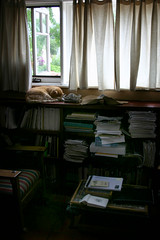
Fred, my old pal, loves to keep me company but I don't offer him any excitement up here in my small library nook.... but then again, he only has just so much energy for excitement. Do we, as mammals, have the energy when we get older but just can't get to it? Is it that our cells don't have the stuff to make the mitochondria to get us moving?
Sleep is good. My grandfather loved his dreams. He would wake from a dream laughing and then tried to explain the joke to my grandmother - who he had awakened from a sound sleep herself.... Somehow, the joke was not as funny in wake time. My grandmother would pat my grandfather and tell him to go get the punch-line again and re-tell it in the morning.... and then fall back to sleep.
Sleep. Cats are so good at it. Somehow even in Fred's advanced age, he can get into positions I wish I could. They drool when they sleep just like people.... Why, I am not surprised...
It has been exceptionally hot here. So, hot that Fred has had a hard time finding a good spot to sleep. He will find a spot, flop down, close his eyes - and you can tell by his ears that he is not happy... He will move to a new spot. There is a lot of agitation going on. Sometimes you can see it in the twitching back of a cat... they seem to be bothered by itchy things, too....
Mouse, his buddy, was so upset by the heat he thought perhaps the bathroom sink would be nice. He curled up there for a while - even tolerated the drip, and that was funny to watch - but he got the sink warm and so had to jump down and find yet another spot.... The endless search for a cool spot to lie down and sleep.
Sleep, Ernestine, my leopard tortoise, has a young male friend (also a leopard tortoise) courtesy of the Vet. His name is Jack. Jack has long legs and is shaped more like a football and is a very friendly guy. He loves Mouse the cat, but Mouse the cat does not trust a long-legged-variegated-mobile-rock heading like a beeline to him across the lawn..... EEEK!
Jack loves anything that is black and white or grey and white.... just like him. Ernestine stumps about eating grass and dropped fruit from the trees. then she takes naps.... under bushes where the soil is cool. And, jack goes to find her. He is young and doesn't know what to do with Ernestine. He understands she is something he should explore but he is confused. He tends to climb up the rocks and bushes around her. I will find him hung up dangling from branches just above her. I put him down next to her and in the afternoon I find them face to face or shoulder to shoulder tucked inside and asleep.
Sunday, May 28, 2006
burns-me-to-the-quick
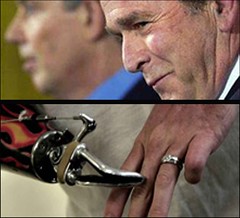
I have been wanting to write about my thoughts and findings on the connections between the simple molecules that form when organisms die to the molecules organisms make (while alive) to attract, distract, and manipulate each other... but today is Memorial Day. And I feel the need to add my voice to the roar that is building to this farce....
Memorial Day and Bush's War
How can anyone say that in defending the WAR we are defending our troops?
Our troops are living breathing human beings.
War is an act and it is not a living breathing life.
War is an action that we choose.
War does not breath air.
War does not feel.
War does not bleed and die.
War, however, is fed and supplied and it spreads.
War does not build houses or plant crops or cure diseases.
War does not change diapers or feed the poor.
War is what is in essence what is the worst that human beings do.
War is what is draped by those who promote and propagate it in ill fitting descriptions of necessity and patriotism and for our common good.
War not only kills those who fight but those who don't.
War is what scours the earth of human beings and of other life as well.
War does not stop when it ends.
War only stops when it never begins.
Sunday, May 21, 2006
chems
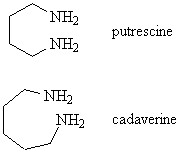
Chemosensory is essential for survival for life. Pheromones are chemicals that an organism releases externally to send information to another organism.... Some of these chemicals have been identified from animals such as moths and humans. Two interesting components to this story are about how animals find food plants and mates, and how plants hijack this trait for their own needs.
Wednesday, May 17, 2006
crazing
...So we find that the siphoned water from the pot that has mostly cattails causes lots of algae to grow and the pot with bulrushes mixed with the pot with no plants has little alga growth in comparison...
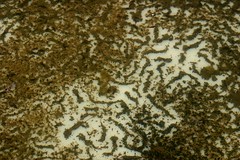
The mozzies loves the pot with the algal growth! Though the two pots have many mosquito larvae, the one with lots of algae has more that are ready to emerge! There are lots of places to hide or lots of food to eat?
But just look at the pattern of algae that floated to the bottom....
We know now that the water from the pots had lots of colloidal molecules or NOM or natural organic matter which, through electrostatic conditions, attracted to the metals that we spiked in the pots.... It kept the toxic metals suspended in the water column caused the change in the flagellate populations and may have killed the fish and dragonflies... . But look at the pattern of the algae on the bottom of the pot.... you are now looking at what the colloids looked like.... Last week they were floating in the water but now they are like curtains that have been cut from their curtain rods.... The colloids are like humic molecules with multiple spots which things (not so nice things) attach .... metals - PAHs - plasticizers, hormones.... This is the stuff that makes our water systems go bad. This is the stuff made of carbon molecules (dead things make these floating ghosts of carbon) which pick up the bad stuff we let flow down our roads into our rivers... and stream and oceans...
The mozzies loves the pot with the algal growth! Though the two pots have many mosquito larvae, the one with lots of algae has more that are ready to emerge! There are lots of places to hide or lots of food to eat?
But just look at the pattern of algae that floated to the bottom....
We know now that the water from the pots had lots of colloidal molecules or NOM or natural organic matter which, through electrostatic conditions, attracted to the metals that we spiked in the pots.... It kept the toxic metals suspended in the water column caused the change in the flagellate populations and may have killed the fish and dragonflies... . But look at the pattern of the algae on the bottom of the pot.... you are now looking at what the colloids looked like.... Last week they were floating in the water but now they are like curtains that have been cut from their curtain rods.... The colloids are like humic molecules with multiple spots which things (not so nice things) attach .... metals - PAHs - plasticizers, hormones.... This is the stuff that makes our water systems go bad. This is the stuff made of carbon molecules (dead things make these floating ghosts of carbon) which pick up the bad stuff we let flow down our roads into our rivers... and stream and oceans...
Sunday, May 14, 2006
Haemorrhagica2
Tigers tigers tigers
When did this tiger from Pit 91 of La Brea Tar Pits run? When the L.A. River ran through the Wilshire Miracle Mile passing by the Art Museum. This little ferocious beast fed upon flies, ants and such next to some other extrodinary animals which roamed the Los Angeles Basin.
It may have died before people came to the Americas. But, it ran in the muds of the L. A. River when mammoths and saber toothed tigers plunged into sticky tar and died. Camels and horses and condors and sloths... lions bigger then their African counter parts, died in the asphalt leaving their bones for us to marvel.
Chris Nagano determined this tiger thorax (amazing!!!) and one other tiger part in 1980.... Roy Snelling (hymenopterist) did the other two.... only four Cicindela parts at the museum for now .... just one C. oregona and two C. hemorrhagica and one unknown tiger.

When did this tiger from Pit 91 of La Brea Tar Pits run? When the L.A. River ran through the Wilshire Miracle Mile passing by the Art Museum. This little ferocious beast fed upon flies, ants and such next to some other extrodinary animals which roamed the Los Angeles Basin.
It may have died before people came to the Americas. But, it ran in the muds of the L. A. River when mammoths and saber toothed tigers plunged into sticky tar and died. Camels and horses and condors and sloths... lions bigger then their African counter parts, died in the asphalt leaving their bones for us to marvel.
Chris Nagano determined this tiger thorax (amazing!!!) and one other tiger part in 1980.... Roy Snelling (hymenopterist) did the other two.... only four Cicindela parts at the museum for now .... just one C. oregona and two C. hemorrhagica and one unknown tiger.
mosquito
Well, all of my mosquitoes have died... in both containers. It was just a small look into the pesticide issue.
But, was it only the pesticide?
We put herbicide and Tylenol and anti-psychotic drugs and mercury and zinc and PAHs ... Then a scum and a slick formed and cyano-bacteria bloomed and fungus formed on the dead mats...
Because all of the fish and insects died in all of the pots, then, two weeks later, mosquitoes laid their eggs and larvae hatched. We really needed to take a look at tolerances and toxicity.... But, we did not have all the time and, oh, that awful stuff... money, to conduct yet another study.... We are still processing all of the other samples.... leaves and stems and roots and water and soil and algae and fish and dragonflies .....
So, ...to just to watch the development of the mosquitoes from the pots... I scooped out enough for two batches (one collected two days after the first).... I realized I did not have enough egg cases, but I would note development and time and conditions and the final result - no matter what happened.
I did not mix the water between the two containers and when evaporation lowed the levels, I re-filled to the original mark with drinking water. Each plastic covered (screened) container had one good egg mass. The first container had very little water about one and a half centimeters deep (cottage cheese container).... The second one had three centimeters of water (same type of container and lid).
Within the first day I had mozzies in the first container. Two days later, the mosquitoes in the second container emerged. Four days after that the second container with the most water, all larvae died.
Looking closer at the differences between the two containers, I noticed that there was a lot of fungal growth on the dragonfly tests (skin left over from emerging larvae) in the second container. The leaves left in the first did not have this fungal growth (both samples came from the same pot). The strands of fungus were long, dark, and almost black, and needle like.
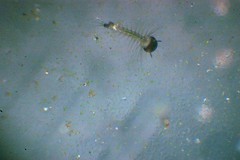
The first container with the first group of mozzies, had clumps of green on the bottom - see the picture. The second container was murky but had either ciliates or flagellates swimming. The first container also had the same types of protozoa but the water was clear. .....Mozzies, for all of their bad rap, filter water of protozoa and algae, so this made sense... but what happened to the second container?
One would think the container with the most water (the second one) would be more successful! Both containers were exposed to some light so that algae could grow. The first container's second batch of mozzies (four times bigger then the first group before they died) fed on the bodies of their brothers and sisters and algae.... The larvae in the second patch only developed to the size of the first batch and then died....
My friend found a paper that described a similar study of a wetland habitat where after adding metals to the water, a bloom of flagellates occurred..... As I recall in marine systems,.... some ocean dinoflagellates can become toxic when stressed. Also, in the marine environment, diatom blooms occur near the outflows from city sewage and urban runoff. Diatoms when stressed (pH changes, exposure to lead and other toxic metals) and deprived of normal river runoff - iron (this is a limiting factor for life in the ocean phytoplankton) - release domoic acid which is neurotoxic to vertebrates. I don't know what kind of flagellates are in our experimental freshwater system, but one wonders....
It's really all about balance isn't it.
But, was it only the pesticide?
We put herbicide and Tylenol and anti-psychotic drugs and mercury and zinc and PAHs ... Then a scum and a slick formed and cyano-bacteria bloomed and fungus formed on the dead mats...
Because all of the fish and insects died in all of the pots, then, two weeks later, mosquitoes laid their eggs and larvae hatched. We really needed to take a look at tolerances and toxicity.... But, we did not have all the time and, oh, that awful stuff... money, to conduct yet another study.... We are still processing all of the other samples.... leaves and stems and roots and water and soil and algae and fish and dragonflies .....
So, ...to just to watch the development of the mosquitoes from the pots... I scooped out enough for two batches (one collected two days after the first).... I realized I did not have enough egg cases, but I would note development and time and conditions and the final result - no matter what happened.
I did not mix the water between the two containers and when evaporation lowed the levels, I re-filled to the original mark with drinking water. Each plastic covered (screened) container had one good egg mass. The first container had very little water about one and a half centimeters deep (cottage cheese container).... The second one had three centimeters of water (same type of container and lid).
Within the first day I had mozzies in the first container. Two days later, the mosquitoes in the second container emerged. Four days after that the second container with the most water, all larvae died.
Looking closer at the differences between the two containers, I noticed that there was a lot of fungal growth on the dragonfly tests (skin left over from emerging larvae) in the second container. The leaves left in the first did not have this fungal growth (both samples came from the same pot). The strands of fungus were long, dark, and almost black, and needle like.
The first container with the first group of mozzies, had clumps of green on the bottom - see the picture. The second container was murky but had either ciliates or flagellates swimming. The first container also had the same types of protozoa but the water was clear. .....Mozzies, for all of their bad rap, filter water of protozoa and algae, so this made sense... but what happened to the second container?
One would think the container with the most water (the second one) would be more successful! Both containers were exposed to some light so that algae could grow. The first container's second batch of mozzies (four times bigger then the first group before they died) fed on the bodies of their brothers and sisters and algae.... The larvae in the second patch only developed to the size of the first batch and then died....
My friend found a paper that described a similar study of a wetland habitat where after adding metals to the water, a bloom of flagellates occurred..... As I recall in marine systems,.... some ocean dinoflagellates can become toxic when stressed. Also, in the marine environment, diatom blooms occur near the outflows from city sewage and urban runoff. Diatoms when stressed (pH changes, exposure to lead and other toxic metals) and deprived of normal river runoff - iron (this is a limiting factor for life in the ocean phytoplankton) - release domoic acid which is neurotoxic to vertebrates. I don't know what kind of flagellates are in our experimental freshwater system, but one wonders....
It's really all about balance isn't it.
Tuesday, April 25, 2006
poisonous scum
Down splashes the water! streaking down the street! swiveling around tires and slipping around oily stains! Leaves collect in pitching masses. Flotillas of cigarette butts gurgle and boil with human spit-um and dog, bird, and unknown animal shit and vomit. Parts of decaying animals lurking in the dark street drains, swallow the incoming waters and mix it all up with the pesticides and herbicides skimmed from silly urban "gardens."
Sunlight kills many of the floating micro-organisms hacked up from diseased lungs and sickly bowels. But enough of the organisms attach to the coffee cups and plastic bags that cram the storm drains that rush to the sea.
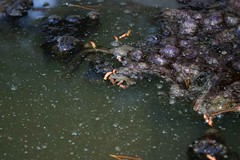
This is just a picture of some water in a plastic pot that used to be clear.
It used to be free of horrors.
There used to be mosquito fish (which ate the mosquitoes) and damsel and dragon flies (which ate the fish and mosquito larva and adults).
Then we poured pesticides and other PAHs and plasticizers and mercury and lead and zinc and Tylenol and estrogen and drugs that prevent psychotic episodes in people - all the stuff that run down our streets into the sea and lakes and rivers and streams.
First the fish died. Then the dragon flies died. Then the algae and cyano-bacteria pulled up from the soil which covered floor of the pots. There were greasy globules of oily substances that kept things floating in suspension, There grew a skin of a sort that slowly rotated in the changing temperatures of the day. The water never settled out. Then the fungus grew. Bubbling thick masses of black and pink burped musty puffs of spores. You can smell the fungus for many meters from the pots.
Then one day, floating on the top were many mosquito eggs. The larvae hatched. They wiggled to the surface to sucked in their first gulp of fresh air.
They ate the algae and shed their skins of chitin and toxins.
Then another batch emerged.
The first batch died then the second ate the dead of the first. Little round heads of mosquito larvae bob at the bottom of the pots. With each new batch of mosquito larvae, the water cleared. With each new batch of mosquito larvae, they became more and more tolerant of the pesticides and other toxins that might kill them. Finally, the adults emerge from their pupas, ready to mate ... hauling out their shoulders from the slick surface. Masses of flies dancing in the pools of dwindling sunlight. ... and then the females, ready to take their first blood meal so they can lay the next generation of mosquito - able to tolerate the insecticides that killed its predecessors....
Sunlight kills many of the floating micro-organisms hacked up from diseased lungs and sickly bowels. But enough of the organisms attach to the coffee cups and plastic bags that cram the storm drains that rush to the sea.
This is just a picture of some water in a plastic pot that used to be clear.
It used to be free of horrors.
There used to be mosquito fish (which ate the mosquitoes) and damsel and dragon flies (which ate the fish and mosquito larva and adults).
Then we poured pesticides and other PAHs and plasticizers and mercury and lead and zinc and Tylenol and estrogen and drugs that prevent psychotic episodes in people - all the stuff that run down our streets into the sea and lakes and rivers and streams.
First the fish died. Then the dragon flies died. Then the algae and cyano-bacteria pulled up from the soil which covered floor of the pots. There were greasy globules of oily substances that kept things floating in suspension, There grew a skin of a sort that slowly rotated in the changing temperatures of the day. The water never settled out. Then the fungus grew. Bubbling thick masses of black and pink burped musty puffs of spores. You can smell the fungus for many meters from the pots.
Then one day, floating on the top were many mosquito eggs. The larvae hatched. They wiggled to the surface to sucked in their first gulp of fresh air.
They ate the algae and shed their skins of chitin and toxins.
Then another batch emerged.
The first batch died then the second ate the dead of the first. Little round heads of mosquito larvae bob at the bottom of the pots. With each new batch of mosquito larvae, the water cleared. With each new batch of mosquito larvae, they became more and more tolerant of the pesticides and other toxins that might kill them. Finally, the adults emerge from their pupas, ready to mate ... hauling out their shoulders from the slick surface. Masses of flies dancing in the pools of dwindling sunlight. ... and then the females, ready to take their first blood meal so they can lay the next generation of mosquito - able to tolerate the insecticides that killed its predecessors....
Friday, April 14, 2006
early-morning-moon
Early in the morning, when only the mocking bird sings, is an odd time. In winter, crickets don't sing. It is too cold. I find this time unpleasant because it is so alone.... Just the mocking bird and I. One can ponder ephemeral life .... my own and others. How silly it is to think we live forever. How frightening to think that we could be stuck in a 'heaven' of our own design.... strumming a harp or using up virgins.... floating toward some light... both of which sound like hell ... long sleep isn't so bad.

Wednesday, April 05, 2006
Playa Vista
So, while I was taking the photos of these panoramas of Ballona wetlands - in the man-made freshwater section (they use sprinklers to water the 'natural' wetland areas) - I was thinking of Global Warming.... I can almost see people purposefully crushing the life of the entire planet .... every time I watch a television show or listen to a radio program they are selling car after car after car .... I can watch images of melting mountains of ice at poles with each new line of vehicle ... the deep ocean currents changing directions as the trucks roll by tearing out trees and planting lawns ...

bluffs at Ballona
The cold water sinks, and salt water is heavier and has a lower freezing point. Deep ocean water, is at or below freezing but is liquid from the its salinity and great pressure. The ocean waters are never still, they move and change latitudes and longitudes and pour around the contours of the sea floor and continental shelves. The surface temperatures are warmed at the equator. The winds and the currents pump the air and water like a heart from the pull of the moon, the temperature changes of the seasons, and by the changes of night and day. The deep earth vents, and the cold, melted freshwater from land further churn the oceans. Our over use of fossil fuels, the burning and destruction of forests, mountains of trash and manure, loss of green forested land for cement are all contributing to the change of CO2/N over O2....
There were a few other times when our planet went through such changes in a short period of time. The first great death happened when the first organisms to photosynthesize created so much oxygen it killed the methane breathers... Then there was another great death when atmospheric oxygen plummeted from 21% to less then 12 % in only 20 million years. Land vertebrates at sea level had the same amount of oxygen as if they were at present day 9,200 foot mountain ... The Late Permian Early Triassic saw 90 % of the ocean organisms die and 75 % of the land plants and animals die. What a horrible death it must have been for not only did the oxygen vanish, but CO2 increased and with it temperatures. The earth became a steamy hot box with not much to breath...
http://www.uwnews.org/article.asp?articleID=9592

There were a few other times when our planet went through such changes in a short period of time. The first great death happened when the first organisms to photosynthesize created so much oxygen it killed the methane breathers... Then there was another great death when atmospheric oxygen plummeted from 21% to less then 12 % in only 20 million years. Land vertebrates at sea level had the same amount of oxygen as if they were at present day 9,200 foot mountain ... The Late Permian Early Triassic saw 90 % of the ocean organisms die and 75 % of the land plants and animals die. What a horrible death it must have been for not only did the oxygen vanish, but CO2 increased and with it temperatures. The earth became a steamy hot box with not much to breath...
http://www.uwnews.org/article.asp?articleID=9592
Ying
In the end, after hours. days, years of work, you must publish. Then after that, you hope that what you have done will be of use to those who come after you to do similar or related work. The tedium of much of the everyday stuff is like any other job, but perhaps more like the tedium of art.
The initial idea of a painting is exciting. Then the sketches begin. So many of the sketches that you produce are not up to the ideas that you think you have done in the past... doubts creep in... but that is all part of the fight. With a blank canvas, hope is renewed but then so are the new worries. For most of the painting, you hate it. Love returns only near the end where you just can't get enough of the brush strokes, the colors, the shapes. Damn!
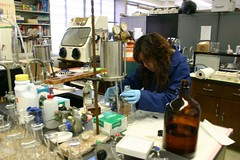
The initial idea of a painting is exciting. Then the sketches begin. So many of the sketches that you produce are not up to the ideas that you think you have done in the past... doubts creep in... but that is all part of the fight. With a blank canvas, hope is renewed but then so are the new worries. For most of the painting, you hate it. Love returns only near the end where you just can't get enough of the brush strokes, the colors, the shapes. Damn!
Bottles
I have been submerged in two very engrossing projects ... one that is testing the efficiency of wetlands in taking up pollutants (pesticides, PAHs, metals, drugs) by isolating the two major wetland plants and the soils from a source in the man made wetlands of Sweetwater Reservoir... and the other is sampling the runoff water from the parts of the Los Angeles Basin which feeds the Ballona Wetlands. Both studies can finish with many useful concepts and discoveries. They are both very labor intensive, and even with the simplest tools for collection, filtration, oxygen, sampling, and other thoughtful considerations of protecting and stabilizing pollution constituents after capture, there is just not enough people, time or money.
Liters and liters of water must be collected in hopes to capture the tiniest amount of some chemicals. The water must be prepared for storage, and then carefully kept from light. Many times the tiniest amounts, perhaps in parts per million (even trillion), can have dire effects on those (people and other animals) who drink or swim in the water. Then to isolate and find those compounds which have been shown to produce adverse affects, the equipment for finding them must be calibrated (and sensitive) to those amounts. Then the number of times the water must be collected (or for any other scientific study... the number samples ) must be high enough to demonstrate a trend - in other words - to have significance.
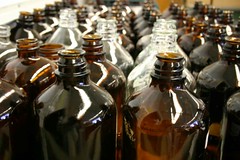
Liters and liters of water must be collected in hopes to capture the tiniest amount of some chemicals. The water must be prepared for storage, and then carefully kept from light. Many times the tiniest amounts, perhaps in parts per million (even trillion), can have dire effects on those (people and other animals) who drink or swim in the water. Then to isolate and find those compounds which have been shown to produce adverse affects, the equipment for finding them must be calibrated (and sensitive) to those amounts. Then the number of times the water must be collected (or for any other scientific study... the number samples ) must be high enough to demonstrate a trend - in other words - to have significance.
Saturday, March 11, 2006
peach-blossom
I can't explain how I feel about the weather. I should be very relieved about the rain. It is cold here in Pasadena - around 37 degrees F... and in Oklahoma it is 80 degrees F. But I worry about the possibility of too much water in a short time when the mountains' trees and shrubs have not had enough time to re-grow from past fires. The plants hold back the mud. The trees absorb the water. The native plants can handle the heat from the fire which the introduced weeds from urban development cannot .... so ..... what to do.
We had a hail storm this afternoon. Not as robust as a month ago where the stones were the size of marbles.
I have gone up to the mountain to take pictures of the hillsides to document the present conditions. If we continue to have lots of rain we may have mud slides. This could be very bad.
The mountains' geology and composition of sediments from ancient rivers (which created the San Gabriel Mountains) make a very porous and rocky (some rocks are quite huge) sludge when mixed with a great deal of water from rain and snow. Months after last years storms, waterfalls ran until late summer. The cold weather, this year, has brought the snow level to around 1300 feet above sea level in some parts. Last year's storms had in some parts of the mountains, 20 inches of rain! If something like that happens this season, even with all of the dredging of the bottom of the San Gabriel Dam by the County, we could have floods.
With so many housing developments at and near the mouth of the river the City of Azusa and others take chances with peoples' lives. Why do Cities allow development so close to the moth's of Rivers? .... so close to open oceans? .... so close to? ...... City Governments need to take more of an active role in the protection of their citizens.....
I learned just recently that the same area during World War II was a site of a nerve gas manufacturing site developed to deter the Nazis( "if you drop anything on us we will give you double" ).... A person who lived in the area during that time described the situation. His father was a policeman at that time and when an incident within the plant occurred, releasing nerve gas into the area, his father went back in to save his buddies.... the three of them survived.... The person who recounted the story said his father was a large man who carried one man over his shoulder and dragged the other by the scuff of his neck - shirt - to safety
What other things have happened at the mouth of the San Gabriel River?
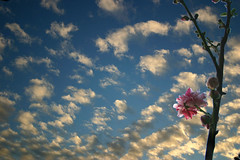
We had a hail storm this afternoon. Not as robust as a month ago where the stones were the size of marbles.
I have gone up to the mountain to take pictures of the hillsides to document the present conditions. If we continue to have lots of rain we may have mud slides. This could be very bad.
The mountains' geology and composition of sediments from ancient rivers (which created the San Gabriel Mountains) make a very porous and rocky (some rocks are quite huge) sludge when mixed with a great deal of water from rain and snow. Months after last years storms, waterfalls ran until late summer. The cold weather, this year, has brought the snow level to around 1300 feet above sea level in some parts. Last year's storms had in some parts of the mountains, 20 inches of rain! If something like that happens this season, even with all of the dredging of the bottom of the San Gabriel Dam by the County, we could have floods.
With so many housing developments at and near the mouth of the river the City of Azusa and others take chances with peoples' lives. Why do Cities allow development so close to the moth's of Rivers? .... so close to open oceans? .... so close to? ...... City Governments need to take more of an active role in the protection of their citizens.....
I learned just recently that the same area during World War II was a site of a nerve gas manufacturing site developed to deter the Nazis( "if you drop anything on us we will give you double" ).... A person who lived in the area during that time described the situation. His father was a policeman at that time and when an incident within the plant occurred, releasing nerve gas into the area, his father went back in to save his buddies.... the three of them survived.... The person who recounted the story said his father was a large man who carried one man over his shoulder and dragged the other by the scuff of his neck - shirt - to safety
What other things have happened at the mouth of the San Gabriel River?
Subscribe to:
Posts (Atom)