Friday, March 30, 2007

It IS Spring....

The flowers are blooming on the fruit trees. Weeds are as high as my knees. Birds of all sorts, are tearing up my Spanish moss (Tillandsia usneoides) for their nests which drape all the outside lights. Acorn Woodpeckers (Melanerpes formicivorus) were hitting my neighbor's Liquidamber styraciflua so loud it echoed inside my house. There were two males hopping around at top of the tree.... actually hopping on their tails.... over a single female which was flying around them. I guess one male looked cuter and flew off with the 'girl' which left this poor guy for me to take a quick picture of it in its confusion.


Then just inside the garden two male Xylocopa sp. or Carpenter bees were making a ruckus. The males have longish hair that is yellow-brown. They seem very mean and aggressive, but I caught this one to examine it up close - It hated that! They do not have a stinger and these two males were demonstrating their ability to find a good home for the shiny black female just up in the tree near-by. When I happened along this one male was petrolling his prime spot. A second male tried to take it but, the first one shooed the usurper away. This wonderful little guy kept his eyes on me as I took this shot. He knew I was trouble! I love his antenna.


Then I heard the sound of .... oh, I can't explain it.... I have a chicken and my neighbor came over to report that she heard my chicken coughing or having a hairball or something.... Then she noticed that my 50 pound tortoises were.... um.... She was shocked. I tell you ! Shocked!


But the best part of my spring day was at the market. This young lady was scurrying into the florist shop and said something about getting her stuff for her friend's babyshower.... OH, how she fussed! Two men from the market came out to help her. She was late and the florist was late and and and what was she to do!!!!!.... "Yes.... just bring your car around and we will put the balloons in your car...." The gal ran off and drove up in this small car.... or did she order too many balloons???? The guys had to stuff the balloons into the car while the lady was in the driver's seat and STILL she had to drive off with balloons coming out of her windows ..... Everyone stopped to look and laugh....


Spring brings out the silly in all of us...


One last shot.... This little shop has been here for ages. This was the first time my son saw it. He had my camera and thought it a hoot. Enjoy your spring.

Sunday, March 25, 2007

CFCs


Funny story.... you know how it is. You hear one thing and then another and the next thing you know they all connect.... into one big cluster f**k. (an aside; I learned that term from an esteemed Caltech person who will be nameless.... Caltech folk have very interesting colloquialisms for describing horrific mistakes.)

I lived in Dayton, Ohio, the home of General Motors truck division and the birth place of two very interesting chemicals that will dog humanity until the day we disappear. In the city of Dayton there is a smaller community called Kettering named after the man who developed the starter motor for all motor vehicles today. The starter motor was key to selling all those cars we have on the road today. Before his nifty devise, you had to have some strong person crank over the engine to start it. Lots of people hurt themselves badly. Mostly rich people, with expendable help, had cars.

Kettering, and a number of other people, felt that oil was not going to be the way of the future of automobiles. He and many others felt that ethanol was going to be it and that the US could produce enough for our automobiles and be independent of foreign oil. Does this sound familiar?

Charles Kettering hired Thomas Midgley, a chemist, to devise a way to stop the 'knock' in our cars engines. Midgley created tetra-ethyl-lead (TEL), an additive to gasoline, which aerosoled lead from millions of tailpipes into the air, water, and soils. This period, geologically speaking, is like a fraction of a second in time,... yet... our children's children's children will be 'less' for it. Lead deforms and disfigures and causes mental retardation and destruction of brain functions. Lead doesn't just do its work on humans. Along the main road from the airport to Johannesburg, South Africa, I found ornamental trees filled with butterflies that could not complete their pupation cycle and emerged deformed. Hundreds and hundreds of dead butterflies at the base of the trees year after year should alert people to stop using this poison, you would think..... But then... many people died in the labs of Dupont/GM/Standard Oil creating tetra-ethyl-lead and many sickened including, Thomas Midgley.

Midgley also developed a 'safe' refrigerant which today, like TEL, is banned by many countries. It allowed for people to have refrigeration in their homes and air conditioning.

What is interesting is that these two chemicals allowed everyone and anyone to own cars and to enjoy air conditioning and have refrigeration. There is no doubt that the devices gave us some short moment in our human history of comfort and fun .... But because of their popularity - you can do a one-to-one association with numbers of humans to numbers of devices - the damage done to our only home, earth, is incalculable.

But what really happened? For generations it has been understood that lead was the poison that destroyed Ancient Rome - not Christianity (sorry, I had to study these roots myself in Catholic school). So, why did we think it was 'okay' to use the stuff? How about the connection between Standard Oil, Dupont (which took over GM) and dropping ethanol for the US fleet ....ethanol did not knock - gasoline did.... Then the next question that bugs people who wanted the electric car for economic and ecological reasons.... Why did GM drop the EV1 and pay off a member of the Californian Air Resource Board and buy up the patents for the really good car battery that could be used for electric cars????..... Let me see.... Oil companies on the boards of GM that made the EV1..... hmmmmmmmmm??????

But I still don't get it why these dudes think that they will be unaffected by their own actions? Do they have some sort of ticket to another world? One without global warming? What???? The super rich during the European Plagues were NOT immune from getting sick. They did try to avoid it by building their castles far away from the great unwashed (oh, right, they, too didn't like to bathe...). Only those who had a particular genetic predisposition to avoid dying of the infection from the black plague were safe ... which to this day, protects their descendants from AIDS (don't go around hoping you are a descendant).... Perhaps, it is thought by the super rich that patting and rubbing and wallowing in lots of greenbacks will protect against the verisimilitudes of bad actions.


When I lived in Dayton there was a big celebration for the birth of Midgley. I was commissioned to paint a mural of a CFC molecule. I was allowed a lot of creative freedom - hence the swirls and such. I asked about the celebration, and what was said was ... CFCs saved a lot of lives because ammonia was the refrigerant of the large ice factories. People used the chunks of ice in their homes to cool and partially preserve their food. The concentration of ammonia in the factories was toxic when it leaked and it was explosive. There was good with the bad...I was on the cover of the Dayton Daily News with this mural......

Friday, March 02, 2007

2005 to 2007, San Gabriel Mountains


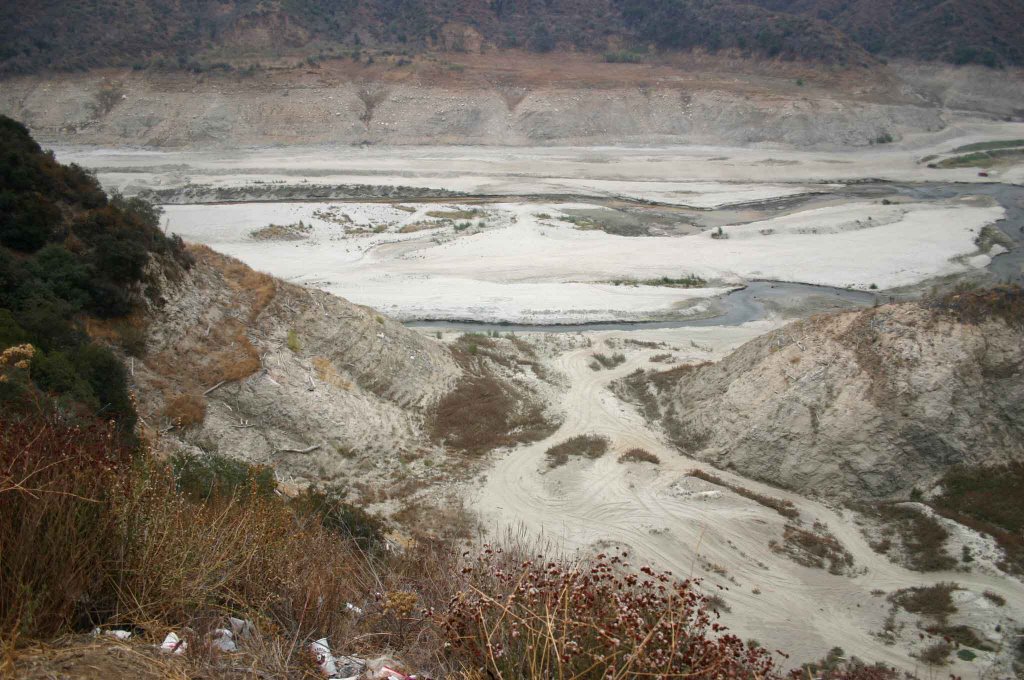
My grandmother would say, "...one should always have a reference point from which to compare...." and so to understand my last post, I have to go back to my photos of the San Gabriel Mountains from a couple of years, at least. Is my reaction to the condition of the SG River valley from February 24, 2007 just because I have not visited the area for a while... or is there something very different seasonally and perhaps 'globally'? The top picture was shot February 2005.


Look at February 24, 2007... this is not of the same angle of the valley and the reservoir as in the upper shot, but if you could look to the left up into the upper tributary of the River... this what you would see..... today....


Late November to March is our rainy season (give or take a month) so in February the rains should have stimulated growth of not only the weedy grasses but also the oaks and the Laurel Sumac (Malosma laurina).


The picture on the left was shot after the 100 year storm in March of 2005. The reservoir was being drained. The mountain face with the most green vegetation on the right, was taken at the higher elevation approximately a mile or so from the area seen on the left.

In April of 2006, the valley was still green with some patches of dry. The picture on the left is at a higher elevation (above 2500 feet above sea level). The picture on the right is just above the dam (seen in the upper image)and around the thousand foot level.


The larger picture below was shot in December of 2005. This is looking north past the valley. I hiked with a friend on the 26th to enjoy the cool air of winter. The toyon trees (Heteromeles arbutifolia) were covered in red berries and lots of birds were enjoying the feast.


Now, the question is, is the valley being impacted by something that is drying out the vegetation faster then in other areas? I have been driving the last few days around through in the passes and I find some spotty drying, but not the wholesale valley as seen in the surroundings of the San Gabriel River.


I called this picture '80% dead'.... I am not sure if it is.

Sunday, February 25, 2007

Record dry year - so far....


I have been pining for the mountains. I have been to busy to visit. The bug study, for me, is over but there are a few this and thats to do. I had to see what the few rains had done - if anything - to encourage weedy grasses and such.

As I drove up Highway 38 I noticed that the face of the hillside where the new community was built a few years ago in the mouth of the San Gabriel River as it leaves the foothills, was particularly dry looking. The soils around the vegetation was obviously exposed and light colored (dry), but the brush was brown. I stopped to shoot this image just as the local police were coming down the hill. The highway to the top veers to the right.


As I drove up the mountain, the slant of the faces were brown - I did not see much green from the Laural Sumac which dots the landscape. All around me, the valley looked dead.


The lower part of the San Gabriel Dam had water, but above, there were only tiny streams.


A section of the running water had red algae and the deeper section had green. The Forest Service and County people suspended a red tape so that the Off Road Vehicles would not run through our drinking water.


I just could not get over how bad the valley looked. How much of the vegetation was dead and how deep did the plants die? If we don't get more rain this could be the worst fire season ever. And, even if we do get enough rain to bring these plants back from the brink, there is something else needs addressing. Slides.


Roads into forests bring people with their weedy non-native grasses and other invasive plants, hitchhiking on shoes, tires, clothes, dogs, and hair. Roads also bite into the basic fragile structure of mountains and hillsides. It is normal for areas around roads to look different then areas without roads. This spot shows that the construction of the road plus the erosion and weeds, have created a situation where the integrity of the slope is becoming weak and, in a sense, is becoming fluid. This section of the slope near the road even looks like it is pouring and ready to slump onto the road below.


This area is were a hill slide occurred last year and the year before. There is nothing to prevent further erosion. Plants that could prevent further slumping do not have the time to grow and set roots. This area will continue to degrade until the flat stabilizes as a deep furrow... However, that may undermine the road and other hill side structures.


And... there is something else going on here.... The rains that did come may have caused more slumping and slides. The weather has been so dry for so long that plant roots are shallow. The dirt below the plants are bone dry and very friable. When the rains come, the soils at the surface become wet and heavier then the soil below, and the loose dry dirt act as ball-bearings carrying the plants and the hillside with them.


This slide is brand new. It was not there this last summer. You can see the dead sumac rinding down the slope on their shallow rooted toboggans.


Just as I turned around to go back, I noticed that there was the beginning of a new slide. The dust was rising and little cones of piled dirt had just formed. Sometime, soon this section will have a great bite out of the face of the mountain.


The mountains look sick. The vegetation seems not to be doing well. We need to do better.

Sunday, February 11, 2007

Los Angeles Rain and "CARB" car

California Air Resource Board and its CARB car


It rained last night. Finally! Yesterday was sunny, warm and beautiful. My friend and I had lunch at the Port of Los Angeles, outside, under an umbrella. After we finished around 5 p.m., a huge Tsunami of clouds enveloped the Port community and the Peninsula and 'splashed' against the bridges and container hoists.


At 7 am I met my friend at USC. She was prepping the Toyota EV and checking all the air quality devices. There were at least two computers manning diesel particulates (both newly emitted and ones older, larger, and stuck together in clumps), NOx, CO, CO2, NO, NO2, weather conditions, video and sound, and our global position. About 500 lbs of stuff whirring, clicking, and humming made noise even though the car did not.


When we left USC, the CO2 levels were fairly normal. When we got on the freeway we found the CO2 levels to be double the normal ambient amounts. It stayed that way until the weather changed....


When we got on the road, I watched the laptop and looked at what the instruments were detecting. When a truck passed us there were spikes in the number of minute diesel particles - the ones that contribute to cardiopulmonary disease - and from cars and SUVs as well.


We had stops where we monitored intersections and residential areas for spikes in particulates and other combustion by-products. We video taped the areas to identify sources and recorded our voices for particular issues that we may experience during the drive. We didn't talk exclusively of science matters, my friend and the other people will have a good time listening to our stories.


At the end of the run, our beautiful weather turned peculiar. Not far from us was an oncoming rainstorm. On the west, where all of the cranes and containers for miles, high dark clouds started forming. Then, a bank of low clouds poured over the peninsula north-east of the Port, covering the community with a thick layer of cold moist clouds. It then pushed forward towards the Port litteraly splashing into the container cranes and hoists. Then the world turned very dark and it was time to be home.

Wednesday, February 07, 2007

Dry as Dry Bones


The Los Angeles Times, on February 2, 2007....

"For perspective, consider the driest year in L.A.'s documented record: In 2001-02, 3.66 inches of rain fell between July 1 and Jan. 31. Then it got really dry. February, Southern California's wettest month, produced virtually no rain, and March was no better.

Up to now, the 2006-2007 season has been even drier. But forecasters still believe it's possible the region will see more rain later this month and next. If it continues dry, however, officials said L.A. could be on the road to setting another record.

The dry spell has stretched from the northern Sierra to San Diego."


I must shoot the mountains this weekend. This shot was done in fall/winter 2006. I will go to the same spot and see what the differences might be.

Notice the ridges on the side of the mountain and the dried grasses that grew when there was water... The winter is when the County lets the water run out of the reservoirs and down into the spreading grounds in Irwindale... which is pumped out down stream near Whittier and distributed to 1.5 million people in the San Gabriel Valley. Our 'soiled' water is filtered clean at Whittier and is pumped out in Orange County for drinking water.

We need rain to fill these dams.

Saturday, February 03, 2007

Passion and Climate Change


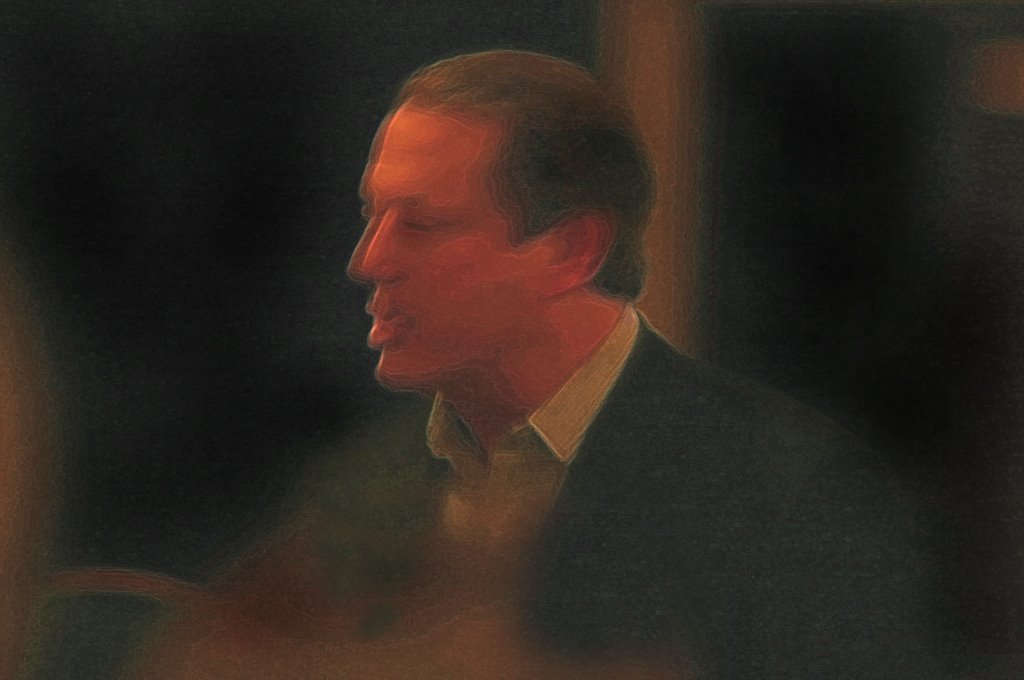
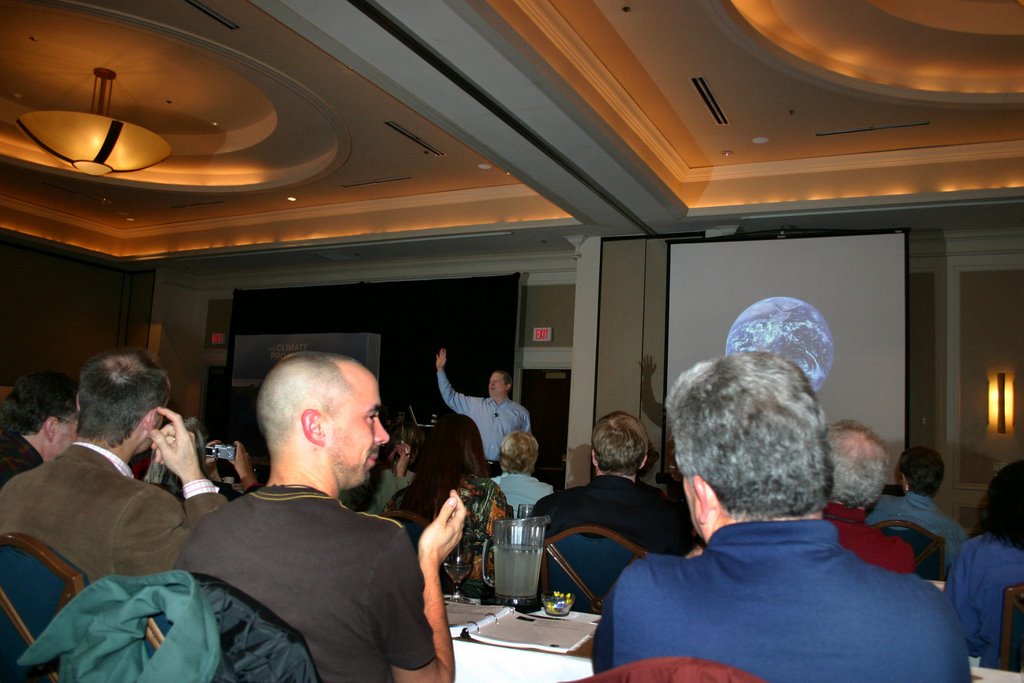
I eagerly awaited the day I would meet up with others in Nashville, Tennessee who wanted to change the public stance in the US on Climate Change. I did worry about not knowing enough. There is so much to understand. I tried to read original literature prior to driving from Los Angeles. I did worry how I would be able to do what I promised to do - 10 talks this year. But, this problem would be solved when I got back home. I wondered if Al Gore actually would teach the session, and he did.

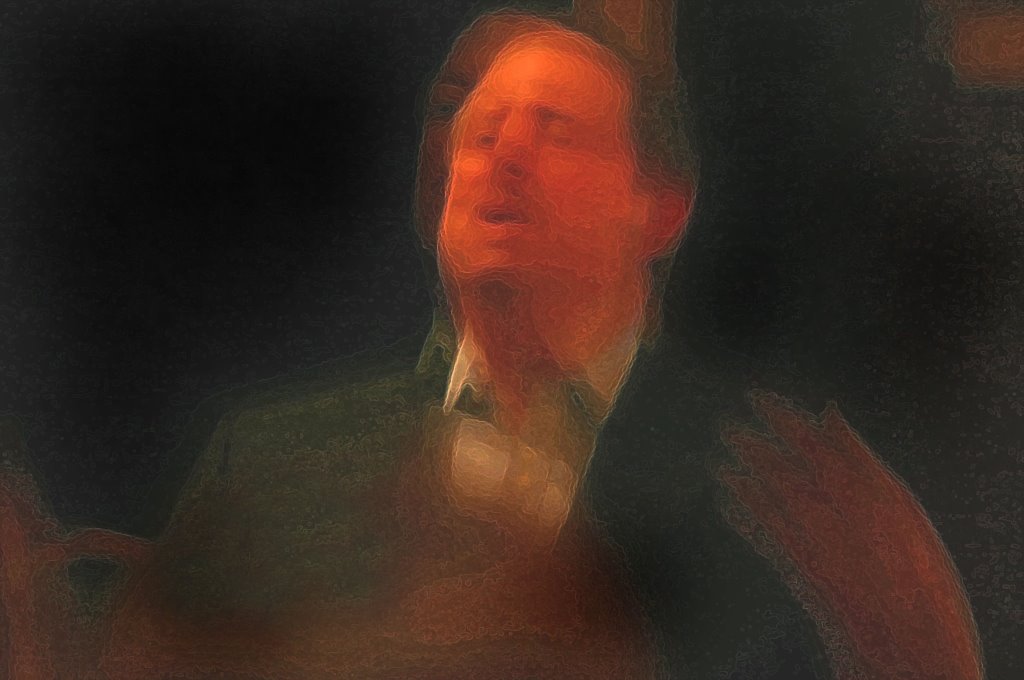
I was in the last group of the thousand speakers Mr. Gore said he would give his presentation to, to disseminate the issues of this hot button topic. He gave his all giving his talk. There was no forced quality to his speech or actions. He was graceful and touching as he told personal stories interpreting this gargantuan and complex problem into something an individual could grasp in a very emotional way. I cried when he talked of his nearly loosing his son from a car accident, and how this close encounter with his death, was like humanity just 'this close' to loosing this world.

I wanted to take pictures during his talk, but I felt I would interfere and break the connection between audience and speaker.... However, at the end I thought I could get in a few shots when everyone would be clapping. I tried to shoot with the widest opening and the most sensitive setting in my camera while using my long lens. The images were blurry and so I shot one shot at the end with a flash using my wide angle.

Looking at the blurry shots, there is no doubt of Al Gore's conviction and passion. there is no hiding these facts. The image with the flash captures his last moment with the last slide of earth. That image of earth - so vulnerable so beautiful...

Wednesday, January 31, 2007

Death of a Rat


This summer I had to take care of my mother, her cat, her tenants, her house, and her unpleasant neighbor. Her neighbor rebuilt the house next door and somehow broke a sewer line which belonged to my mother's tenants.

Their houses and the neighbor's at one time were all one property, were built at the same time (roughly) and all shared the sewer line at the street below .... But in 1951 the original owner subdivided the property into two pieces; the two houses on the up hill were one property and the house the neighbor bought, on the downhill side, the other. Basically a pie shaped piece of land (the neighbor has the smallest part with very little land, approximately 75 feet below my mother's tenants' front doors on the upper street). Since shit flows best downhill, all lines followed the shape of the property to the lowest street - collecting to a single line 15 feet below the neighbor's front door to the street.

In July something icky was bellowing in the neighbor's yard below. A black slow moving river started collecting and I called the Health Inspectors and the place began to crawl with City people. I found the easement signed by all parties way back when, when my grandparents bought the property. I found a lawyer... and the tenants had to use prota-potties for a few months as I tried to straighten things out. I called so many plumbers for estimates to try to fix things. I found a place for the tenants to shower and wash their dishes and clothes. You never know how much we take for granted until the water is shut off... We can do lots without the electricity. We can use candles and we have many hours of daylight... but water! That commodity is something we use all day long even if we don't drink from the tap...

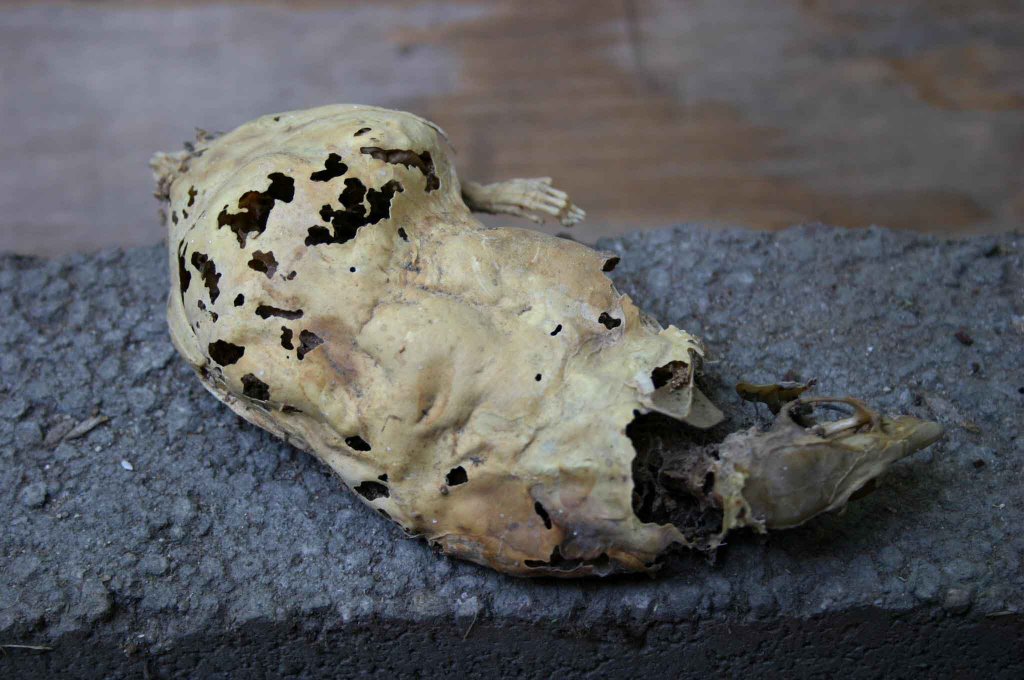
One day, while opening the tenant's basement door - for yet another plumber - I found something on the floor in the back corner. This basement was a storage space for all of the gardening tools and such and apparently my mother had trouble two years ago with fungus in her lawn.... so there was this bag of fungicide which had a tear at the bottom... actually it had been chewed by a rat. There was something partially hidden by the bag and the disconnected soil pipe that look like an old sock draped on a cement block.


The rat got into the basement was hungry, and started to look for food. The fungicide smelled like something it could eat - however, there is no small amount of fungicide that is not poisonous. It killed the rat and then when the flies tried to eat it, the maggots died. The body became bloated - as you can see from its present shape - and after the hair fell out, Dermestid beetles tried to eat the dried skin, and stopped because they, too, died (they caused the funny shaped holes near the legs). The internal organs of the rat are in perfect condition. The hairs of rats are very fine and easily drop out. The skin of the rat's head - the ears and such - may have been attached for a long time except his (yes you can tell it was a male) head was near the sewer clean out and may have rotted to some degree in the wet. The rat had eaten something so toxic that nothing could eat it... even after death.

Monday, January 29, 2007


So, along this corridor I found three coal fired plants and one nuclear. These monsters are hiding in plain site. I mean... if someone wanted to do something they could.... but the Homeland Security... nah,... they are too busy reading email and listening to phone conversations... What do you think?

Sunday, January 28, 2007

What is lurking behind those hills?


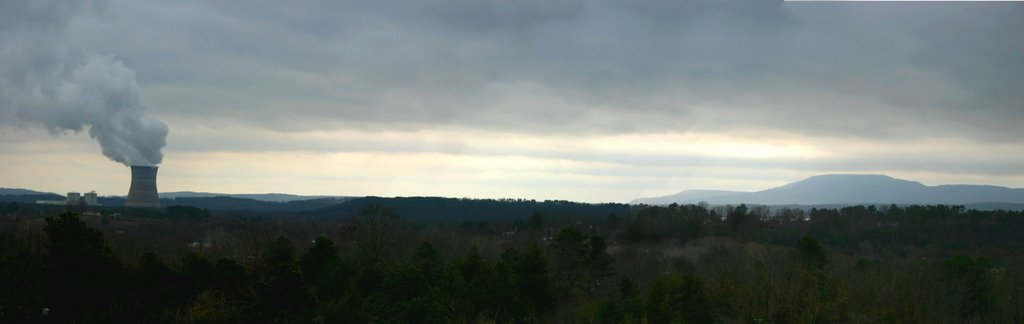
Driving through Arkansas on I-40, I found this pastoral scene interrupted by something that dwarfs this valley of multiple square miles. We built that. We built this one item that dwarfs this large space of land. And then ...there are the miles of copper conduit fanning across this beautiful valley. What things do people give up for television and blenders?

This could stay like this forever until the plant is finished with its usefulness (forever does have an ending in our world).... except, what do we do with the waste radioactive material? The thing to do to keep the plant going is to have breeder reactors but that violates International laws on nuclear proliferation. So, in all our wisdom, we have decided to try to find a deep cave that won't leak its poison into deep aquifers which feed rivers and bodies of water which we tap into to drink... like Yucca Valley. What are our options? The plant could stay forever doing what it does, but things wear out and then what? and then, there are accidents... I hate to think of those.

Saturday, January 27, 2007


I drove home from Nashville after a fine time at the Climate Project. My Prius was a champ. I averaged 54 mph overall. I had to make it home quick, though because the year's first ice storm was about to bite me in my butt. On the radio I head 57 people had been killed in weather related accidents. I was pulled over by a Nashville extraordipoliceman because my right tail light was not working. I wiggeled the bulb and the officer didn't write the ticket - I thanked him for catching it.... I had long nights ahead of me, dancing back and forth on the long two way highways with the big rigs. Those eighteen wheelers run all night long on this nation's highways.

I stayed for a few days at my daughter's house in Oklahoma. That was wonderful fun. I shot pictures and did video for her band. I will cut all that latter for them. But, now, it was time to push on... and on.

My leg hurt while driving - an old dance injury - so many times I turned the cruise control on just so I could change the position of my leg.

I like to find a solid big rig driver. One that doesn't swing back and forth, or one that is strapped for time. I watch the truckers to find a polite guy and then I stick to him like glue. If he surges on, so do I. He goes around a line of trucks, I am right behind him. If he starts slow down... so do I. By doing this I go for long distances through the night and watching a good driver means he has the information on the road issues ahead. Most cars drivers are hazards. Most car drivers are terrible pushy and egotistical and they are dangerous to follow because they rarely know anything about what is ahead of them.

This shot is of the black top of Route 66 heading straight into the sunset. The colors of the snow and the dark greens of the patches of bushes and trees were so beautiful I had to pull off and take pictures. I was driving through a Reservation and most of the land was stark and extraordinarily compelling.

Tuesday, November 21, 2006

Waiting for Rain

Nov-2006-SGM

Back up in the Mountains.... I am still counting bugs caught in 2005 just after the storms and then, months after them. I thought it would be a good idea to shoot some shots of the area before the rains come. So far it has been a very hot and dry summer and fall. Yesterday, on November 20, it was in the high nineties! That is crazy! We are supposed to get some cooling soon... I hope. The air is dry and so is the forest.

trees-from-rain-storm

I was just able to get just a small section of the reservoir and the mountains surrounding them. Ran out of time and my battery died!

If you look at the side of the reservoir, you can see what appears to be sticks thrown up on the banks. Those 'sticks' are tall 15 foot+ trees that were ripped out from the 100 year storm in 2004/2005. Whole areas of the forest was pulled out from their roots and thrown into this body of rushing water that left scars on standing trees in some places 6 feet at the lowest, or acres of trees left standing like sticks with no limbs to call their own.....

mountainside-differences

What strikes me is that there is something that is invading these mountains.

flammable-grass

Many areas next to roads and public access are patches... I would say, growing patches of dry dirt and weeds. Something is creeping up into the forest under the brush. Weeds. Look how they die and fall over. Like little pyres. Almost as if goats have walked to and fro but they haven't. It's just the way these weeds die. I wonder if they are doing other things to this forest besides exposing it to conflagrations? Could they be interfering with the forest's ability to take up important nutrients? Or just out competing the California natives for space?

car-in-reservoir

Taking out the public access to the forest roads would be a loss for many people. I would miss my jaunts into the wild. I just wish that people didn't need to do some things in our National Heritage.

Sunday, October 22, 2006

I have tried to raise these Midwestern tigers, Cicindela sexguttata, before. My friend went back to Cleveland, Ohio to visit family and brought back a few of these wonderful tigers that skittle near the lake's edge. I got so far with my first batch that I was sure that I would have adults by the spring of 2006. However, I was having some trouble catching insects for them and the pet store had trouble getting shipments of fruit flies, that I decided to put the larvae just outside in the warming sun with a banana ... to entice unsuspecting small critters.... Instead, I came back to find the larvae rookery scratched up and a happy Ms. Chicken. She ate my little charges!

So, back to the drawing board... My friend returned with more adults and they laid eggs and now.....

Photo Hosted at Buzznet

But, I still am having trouble getting fruit flies from the pet store. I noticed my bananas had a nice halo of flies.... One way to rid an area, a room perhaps, of flies is to pour out a bit of dark red wine into a glass. The flies go in, get happy, and don't get out... So, with a small plastic spoon in the midst of the larvae, I pour the smallest amount of Merlot. I put just enough wine so that it attracts the fruit and vinegar flies but does not kill them. They drink. They mate. They lay eggs. They get drunk and and and ..... get to close to the larvae.... Happy larvae.

Life is so cruel.

I took these pictures in the afternoon sun as it peeked through the window. I have to sneak up on these guys to see them otherwise they disappear down their burrow.

Friday, October 13, 2006

Phidippus adumbratus


Phidippus adumbratus
Originally uploaded by tardigrade.
Phidippus was sitting on the right rear fender of my car. He looked up and saw me. I love these spiders. He was busy at something, or concentrating on someone - or, perhaps trying to blend in the black of my car.... I reached down to touch his back leg and he gave me another look and turned a bit. I touched his back leg and he stood up higher to look at me, maybe to even look bigger then he was (about 2+ cm). His long mustache was very fetching. I have looked on the net for other color variations of this species of Salticidae, or jumping spider. I think this one was particularly beautiful and furry.

Thursday, September 21, 2006

Torture-destroys-US


Torture-destroys-US
Originally uploaded by tardigrade.
Tiger beetles and people have much to worry about with this American Administration. Tiger beetles because of the total disregard of life and people - especially in the US - the disrespect of human rights and the Great American Experiment. I did this image at this moment of great sorrow.

I wonder, when I vier towards the political, whether I should or not... It is my blog. In one of the striking comments in John Barry's Book, the Great Influenza, he talks about how people took such great loss for granted- accepted it or ignored it... and rarely wrote about their personal experiences. So, I feel that just for the few, I should reveal the depth of our loss as I see it.


At this time, many people are discussing their feelings and thoughts and political ideas on this great conveyance, the Internet. I hope that what is happening will not be relegated to plots and numbers and headlines. I hope that the voices of the world will he available to read and study. I can't imagine people being much different then we are at this moment in time... so, I suspect that the same ills will rise up to hurt and disfigure. But maybe, somewhere there will be minds willing to do better...

Thursday, August 31, 2006

Cloudless-sulphur (Phoebis sennae)


Cloudless-sulphur
Originally uploaded by tardigrade.
Wonderful news! This Cloudless sulphur dropped in this evening at early dark, to sleep the night in my Night-blooming Jasmine
(Cestrum nocturnum).

These animals migrate from Mexico north up to Palos Verdes Peninsula. I have found them as far north as in Mugu Marsh in Ventura. Cloudless Sulphurs are desert butterflies and their larvae eat Cassia alata... They used to be more plentiful in Southern California perhaps, when people planted Crotalaria agatiflora in their back yards. . Certainly people have planted the good the bad and the ugly with their particular needs for ornamentals for their houses (that become invasive species) , or if they or they plant monocultures, or people just accidently walk them in


This shot was taken with a leaf filtering the bright flash from my camera....

Monday, August 21, 2006

holding-Torchy


holding-Torchy
Originally uploaded by tardigrade.
How much do we value life?

Our lives? the lives of our children? the lives of our parents? the lives of our spouses? the lives of our friends? our neighbors? our countrymen? other life?

How do we rate life?

Which lives are more important? Which are less? Why do we think humans are more important then other animals and plants? Do we value those animals with fur over those with six legs? How do those with scales rate to those with feathers? Why do we have such a system of worth?

What would life really be like without other life forms?

Other life is important to me. I would never want to be in a position to choose which lives and which dies especially if it came to deciding whether my child or parent or friend .... or even a stranger.... were more important....

But somehow, we do. We do it everyday. Knowingly and unknowingly. We use chemicals to have large strawberries and kill birds and insects and reptiles and mammals and increase our own body burden of toxins...... And just for some big strawberries.... and maybe not even very delicious ones at that!
We do when we go to war. We decide which people have more worth then others. It's not magic. It's not some edict from heaven. It is one then another then another person declaring that 'those people over there must die.' And it is as simple as that.
It is hard to live with differences. People that think differently, People that look different. People that do things and eat things and say things that are different. It is hard to reconcile that we have the same body and behavioral plan yet we have these small differences that irk us.

How do we live with animals that don't have the same body plan? that cannot speak as we do? that cannot understand our shape and smell and movements and our life styles? But what makes us love and love other animals? and care for each other when not caring is so easy? not loving is so easy?

I felt somewhat silly when the Cicindela that I studied for ten months died, I cried. I cried over the death of an insect. But then, why not. Maybe it's just a simple decision to care.

My mother is loosing her cat. She found him 17 years ago wrapped in bamboo leaves with his sisters. My mother said his mother gave birth to her babies in the bamboo stand and left the kittens in the nest like a collection of easter eggs. The kittens were of various colors mixed with white. The mother was eaten by a coyote but my mother collected the kittens and she and her mother loved them.

Taking-Torchy-outside


Taking-Torchy-outside
Originally uploaded by tardigrade.
Two of the calico sisters were eaten as young adults by other coyotes, one sister lived to 14, but the boy, Torchy is almost 18 years old. His life represents moments in time. My mother's mother and father were alive. My children were little. I lived in Ohio. I was married. But this cat's life is more then place holders for our lives, more then our memories. What is it? What is this life worth?

My mother strokes and pets and gives her cat his medicine for his diabetes. She takes him out into the garden, his little body of sticks with a fluffy tail. He tries to walk but is tired and upset with himself and so lies on his side and cries and huffs and then lays silent in the grass.

Sitting-with-Torchy


Sitting-with-Torchy
Originally uploaded by tardigrade.
My mother loves this animal. She carries him and talks to him. She sits brushing the flies away.

When I was about five years old - ready to run up into the hills to hunt for lizards and bugs, I heard someone crying. I didn't recognize who it was so I followed the sound. I peeked around the corner and watch my grandfather carefully placing our cat, Shadow, into his grave. I had never heard him cry before.